
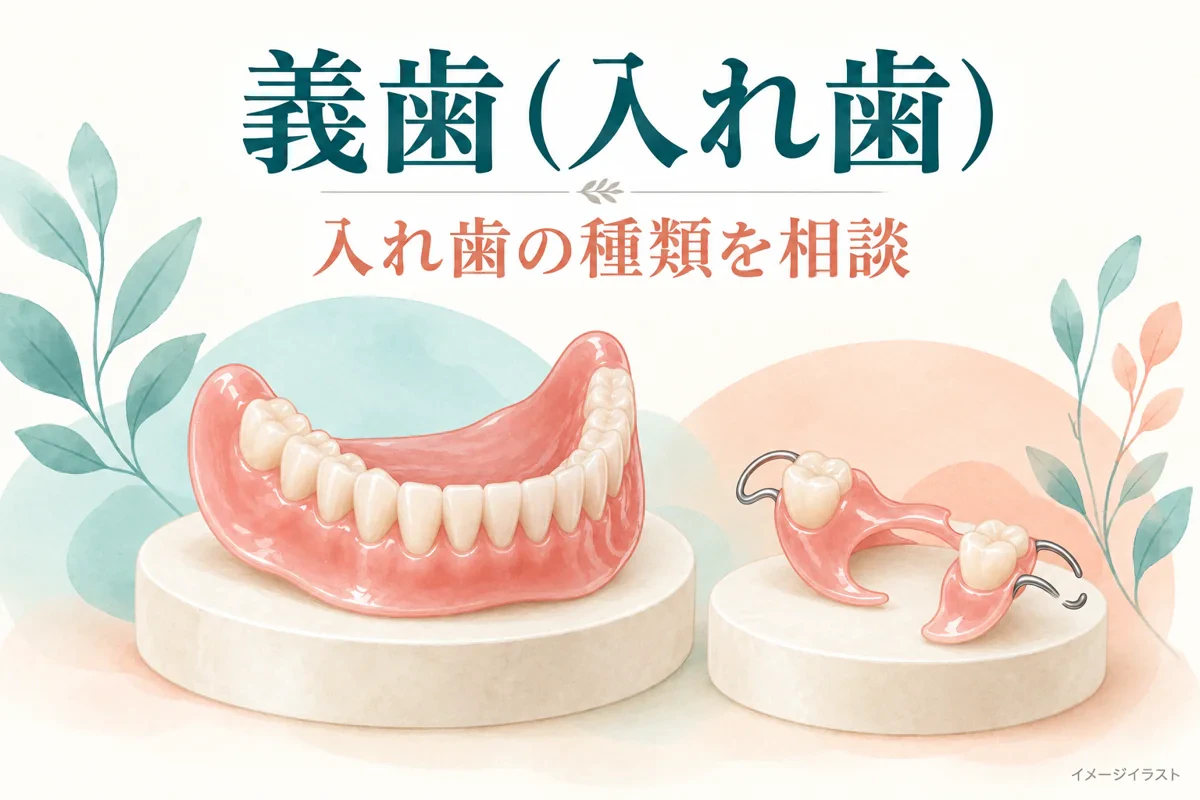
Dentures are removable artificial teeth used to replace teeth you have lost. We handle everything from partial dentures that replace a few teeth to full dentures that replace all of your teeth. The dentures we offer focus on appearance and comfort, such as non-clasp dentures, where no metal clasps are visible, and metal-base dentures, which are made thin using metal. The cost starts from ¥330,000 (tax included) and varies depending on the type.
Types of Dentures
Type | Features | Points to be aware of |
|---|---|---|
Non-clasp dentures (partial dentures) | No metal clasps are used; the denture is held in place by a material close to the color of your gums. It looks natural | Depending on how your remaining teeth are, it may not be possible to make them. Repairs may be difficult in some cases |
Metal-base dentures (partial and full dentures) | Because the base is made thin using metal, it is easier to speak and easier to feel the temperature of food | If you have a metal allergy, the material needs to be discussed |
We will ask about how your remaining teeth are, your bite and your wishes for appearance, and suggest dentures that suit you. Please feel free to tell us what kind of dentures you would like.
Who We Usually See for This
- People who have lost teeth and find it hard to chew or speak
- People who are bothered by the metal clasps of their dentures being visible
- People whose current dentures hurt, shift or don't fit well
Process and Time Needed
- Examination and tests: In this step, we check your remaining teeth, gums and bite. If you have cavities or gum disease, we treat them first.
- Impressions: We record the shape of your gums and remaining teeth.
- Bite record and trial fitting: Before the dentures are completed, we check the arrangement of the teeth and your bite.
- Delivery and adjustment: We place the completed dentures and adjust any spots that press and cause pain.
The number of visits and the time needed until completion vary depending on the type of denture and the condition of your mouth. Even after delivery, you may need to come in for several adjustments until you get used to them.
Caring for Your Dentures
- Take them out after every meal and clean them with a denture brush.
- As a rule, take them out when you sleep and store them in water or denture cleaning solution so they do not dry out.
- Plaque also builds up easily on the teeth that support your dentures, so please brush your remaining teeth carefully too.
Cost
- Dentures: from ¥330,000 (varies by type)
Our clinic offers self-pay (not covered by Japanese health insurance) treatment only and does not provide insurance-covered treatment. All prices shown include tax. Self-pay treatment may be eligible for the medical expense deduction. Please check the latest fees on the price list.
What We Would Like You to Know
- When you first start wearing dentures, you may feel discomfort, have difficulty speaking, or have spots that press and hurt. We adjust them repeatedly until they fit.
- Your gums and jawbone change shape little by little, so dentures may stop fitting as you use them. Regular checks and adjustments are necessary.
- Partial dentures put strain on the teeth that support them, so you need to take care to prevent cavities and gum disease in those teeth.
Frequently Asked Questions
How long does it take to get used to dentures?
It varies from person to person, but it may take a while to get used to speaking and eating. If there is a spot that hurts, please don't put up with it and come in for an adjustment.
Can I just ask about adjusting the dentures I am using now?
Yes, you can. We will check the condition of your dentures and gums, and let you know whether adjustment will make them fit or whether it would be better to make new ones.
How are they different from insurance-covered dentures?
Our clinic offers self-pay treatment only, so we do not handle insurance-covered dentures. With self-pay treatment, you can choose the material and the way the dentures are made, such as dentures where no metal clasps are visible or dentures made thin using metal. At dental clinics that provide insurance-covered treatment, dentures can be made under insurance.
Are there any options other than dentures?
Depending on how your remaining teeth are, there are also options such as a bridge, a crown-type restoration that uses the teeth on both sides as support. We will explain the advantages and disadvantages of each before you choose.
If You Are Looking for Dentures in Shibuya
Halulu Shibuya Dental Clinic is on the 4th floor of the Toyama Building in Jinnan, Shibuya-ku, a 5-minute walk from Shibuya Station (JR and other lines). Our director is dentist Kazuya Shiho, a graduate of Tokyo Medical and Dental University (now Institute of Science Tokyo). We value care that centers on prevention and protects your existing teeth as much as possible. Let's think together about dentures that can protect your remaining teeth for as long as possible.
Our hours are 10:00 to 18:00 on weekdays (Monday to Friday), by appointment only. On weekends, public holidays and evenings, we see patients by appointment only on days when a doctor is in. Please check the calendar when you book for details. You can make a reservation on the web (accepted 24 hours a day), and we also accept reservations by LINE and by phone (03-5422-3518). If this is your first visit, please start with the first-visit counseling (first-visit fee ¥5,500), a session where we listen to your concerns.
Book online with Halulu Shibuya Dental Clinic here
This page was reviewed by Dr. Kazuya Shiho, director and dentist at Halulu Shibuya Dental Clinic.